Based in Pierson, in northwest Volusia County. We serve DeLand, Deltona, Orange City, DeBary, Edgewater, Port Orange, New Smyrna Beach, Daytona Beach, Ormond Beach and Palm Coast.
Get a professional, licensed, expert paving contractor to your property this week for a free estimate.

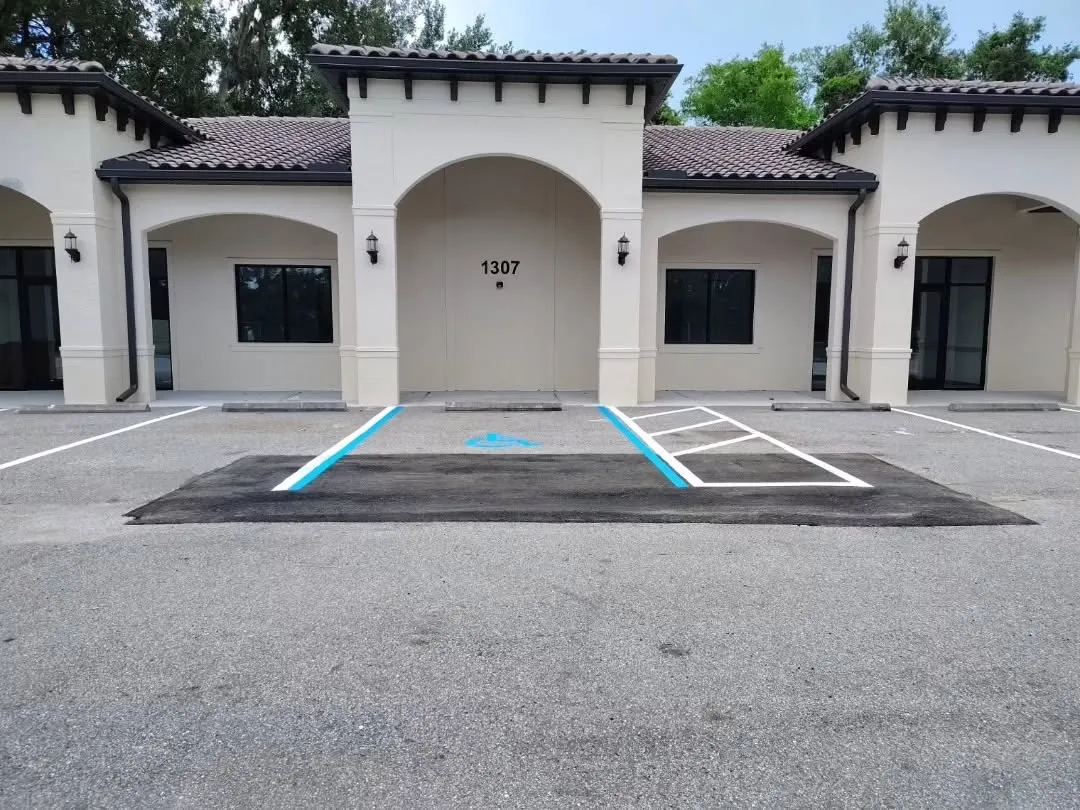
The number of accessible spaces you need isn't a guess. It's tied to the total number of spaces in each lot, following a tiered table in the federal ADA standards, and at least one of those accessible spaces has to be van-accessible. Get the count right before the paint goes down, because fixing a wrong layout later costs you twice.
Here's something most property owners don't think about. Your accessible space count isn't set by your building or your business type. It's set by how many total spaces you've got striped in the lot.
The federal ADA standards use a tiered table. As your total count goes up, the number of required accessible spaces steps up with it. A small lot needs only a few. A big retail lot needs a lot more. The table works the same way whether you've got a handful of spaces outside a rural shop or a few hundred at a busy plaza.
Before we put down any paint, these are the questions that decide your count:
Here's where people get caught. Say you restripe to squeeze in a few extra spaces because your tenants want more parking. That's a fair goal. But if the new total pushes you into the next tier, you now need another accessible space, too. If nobody checks, you've just painted yourself out of compliance.
It works the other way, too. Sometimes an old layout has more accessible spaces than the lot needs, or it has them in the wrong spot, far from the door. A restripe is the cheapest time to fix that. The asphalt is already being marked, so moving a space costs you paint and layout time instead of a second mobilization.
Florida adds its own layer on top of the federal rules. The state's accessibility code has its own requirements for how accessible spaces and signs are marked. A layout that meets the federal count can still come up short on the Florida details. So we look at both before we lay anything out.
That's the whole reason we count first and paint second. The lines are the easy part. Knowing exactly how many accessible spaces your lot needs, and where they belong, is what keeps the job from being done twice.
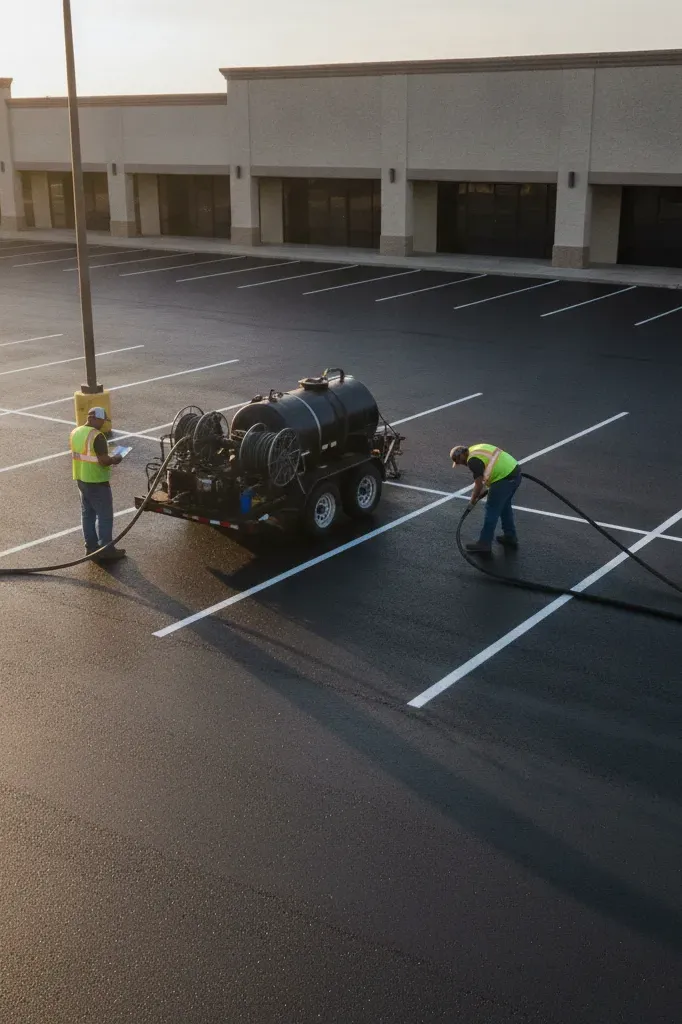
Faded lines don't look urgent. They creep up slowly, so you stop noticing them. But the people parking in your lot notice. So does anyone checking whether your accessible spaces are marked the way they should be.
Most parking lots in Volusia County need new lines every one to three years. Parking lot paint typically lasts from 9 months to 3 years, depending on traffic, sun and rain, and busy lots wear out first.
Here's how to tell when your striping has gone from "a little worn" to "needs attention now."
The Florida sun is part of why this sneaks up on you. Strong UV and constant heat break down traffic paint faster than most owners expect. Busy drive lanes and entrances wear out first, so your lot can look fine in the back corner and nearly blank right where it matters most.
Rural and town lots wear in different ways, too. A lot on a sandy road out in the county picks up grit that scrubs the paint off. A busy plaza in Daytona Beach or Port Orange wears down from sheer traffic. Either way, the lines go. They just go at different speeds.
Here's the part people miss. When your striping needs work, that's also your best chance to check the layout. If you're repainting anyway, it's the moment to confirm your accessible space count and placement still fit the lot, the way we covered above. Tracing over old lines just copies any mistakes onto fresh paint.
Sometimes striping isn't the real problem. If the paint keeps flaking off because the asphalt under it is cracking or crumbling, new lines won't last. Because we work as a full paving contractor in Volusia County, we can tell you whether you need paint, crack sealing, sealcoating, or something more, instead of selling you the one thing we happen to do.
And if your lines are still bright and your layout still fits how you use the lot? Then you don't need us yet. Wait, and check them again after the next rainy season.

New paint only lasts as long as the surface under it. If you stripe over cracked, crumbling, or loose asphalt, you'll be paying for the same lines again sooner than you planned.
Before you book a restripe, take a slow walk across your lot. Look closest at the entrances, the drive lanes, and your accessible spaces. Here's what to look for.
If you spot any of these, the order of the work matters. Repairs come first. Crack sealing comes next, then sealcoating, and striping goes last. Each step before the paint either covers the surface or changes it, so painting early just means painting twice.
Sealcoat also has to cure before lines go on top of it. During summer in Volusia County, a hard afternoon storm can push that schedule back a day. That's normal. Rushing paint onto a damp or uncured surface is how you end up with lines that peel in a few months.
Not every crack means a big job. A lot with a few narrow cracks usually just needs crack sealing ahead of the paint. A lot covered in alligator cracking may need patching or resurfacing before striping makes any sense at all.
If you're planning a few years out, that changes the math too. Say you already know resurfacing is coming in a year or two. You may not want a full restripe right now. A smaller touch-up that keeps your accessible spaces and stall lines clear can carry you to the paving job. After the new asphalt goes down, you lay out the full design once, on a fresh surface.
Lining the work up back to back also helps your tenants and customers. Grouping the repairs, sealing, and striping together can cut down how many times you have to block off sections of the lot.
If your pavement is solid, a restripe is all you need, and that's what we'll tell you. If it isn't, you'll hear that too, before any paint goes down.

Most of a striping project happens before any paint goes down. The painting goes fast. The planning, cleaning, and layout are what decide whether the lines look sharp and stay in the right place.
Here's how a typical project runs, start to finish.
You don't have to shut your whole lot down. Bigger lots are usually painted in sections, so part of the parking stays open while another part dries. If your lot has one entrance, plan which side gets painted first so drivers can still get in and out.
Weather can move the date. Paint needs a dry surface, so a summer storm can push a job back, just like it can with sealcoat. That's annoying. It's still better than lines that wash out or peel.
Striping bids are usually built around a few things, not one flat number. Knowing them helps you compare bids fairly:
When two bids are far apart, compare what each one includes. One might cover cleaning, layout, accessible markings, and phasing. The other might only cover painting over what's already there. I've seen cheap trace jobs copy a bad layout right onto fresh paint, and then the owner pays again to fix it.
Ask every contractor the same thing. What exactly is included, how much of my lot will be closed, and for how long? A straight answer to those questions tells you a lot about how the job will go.
You already know the sun, the heat, and the sand are hard on paint. But that isn't the whole story. Two lots on the same street in Volusia County get the same weather, and one can lose its lines years before the other.
The difference usually comes down to things you can't see from the curb. Here are the ones worth knowing about.
Brand-new asphalt is its own case. Fresh pavement needs time to cure before final striping goes on. Paint it too soon, and the lines can fade or discolor early. If you're paving, ask how the striping will be timed so you don't pay twice for the same lines.
So what does this mean for you? When you get bids, ask how thick the paint goes down, how the surface gets cleaned first, and whether anything on your lot will shorten how long the paint lasts. A contractor who's paying attention should bring those things up before you ask.
Some fixes don't involve paint at all. Turning a sprinkler head away from the pavement costs you almost nothing. Sweeping debris off the lot more often helps too. Both can buy your lines extra time.
It also helps your budget to plan for uneven wear. Your entrances, drive lanes, and accessible spaces will usually need attention before the back rows do. A touch-up on those high-wear spots between full restripes keeps the important markings clear without repainting the whole lot early.
And if your lines keep disappearing fast no matter who paints them, don't just keep repainting. Something is wearing them off, and it's worth finding out what before you spend money on another coat.
It depends on your lot size, but most jobs are done in sections so you don't have to close the whole thing at once. Drying time changes with heat and humidity, and each section stays blocked off until paint can handle traffic without tracking. Bigger lots usually get painted in phases so part of the parking stays open while another part dries.
You can, but it's risky if the asphalt underneath is cracked or crumbling. Paint can bridge a small crack for a while, then split right along it as water gets underneath. Repairs, crack sealing, and sealcoating should happen before new lines go down, or you'll likely pay for the same striping again sooner than planned.
Yes, fresh asphalt needs time to cure before final striping goes on. Painting too soon can cause the lines to fade or discolor early. If you're paving a new lot, ask how the striping timing is planned so you aren't paying twice for the same lines.
Ask exactly what's included, how much of your lot will be closed, and for how long. Bids can vary a lot depending on whether they cover cleaning, layout, and accessible markings, or just painting over what's already there. A clear answer to those questions tells you a lot about how smoothly the job will go.
Yes, we stripe apartment, HOA and commercial lots across Volusia County. Apartment residents park overnight, so we plan the work around when cars are gone and tell you ahead of time which rows to clear.
Call 386-747-8794 or request your free written estimate.
See all of our paving, concrete and excavating services or return to our asphalt contractor home page.