Asphalt paving in Volusia County has to hold up against sandy soil, heavy summer rain, and daily storms from June through September. This page walks property owners through spotting early warning signs — cracking, standing water, faded striping, and potholes — before they become expensive base failures. It explains how to match the right fix to the problem: sealcoating and crack filling for surface wear, resurfacing when the base is still sound, or full removal and repaving once the base has failed.
A major focus is what happens before paving starts, since proper grading, drainage planning, and base compaction determine whether a lot lasts five years or fifteen. The page also covers realistic timelines (most driveways take a day or two, full curing longer) and why booking during the fall-through-spring dry window avoids weather delays that can undermine a freshly laid base.
Quick Summary: Small cracks, faded striping, and standing water are early signs your pavement needs attention before the damage spreads underground. Catching these signs in the first year or two usually means a repair job instead of a full asphalt removal and repave.
The call comes in after the problem has been sitting for a year. You notice a crack near the entrance. It's small, maybe a quarter inch wide. You figure it can wait. Water gets under that asphalt every time it rains in Volusia County.
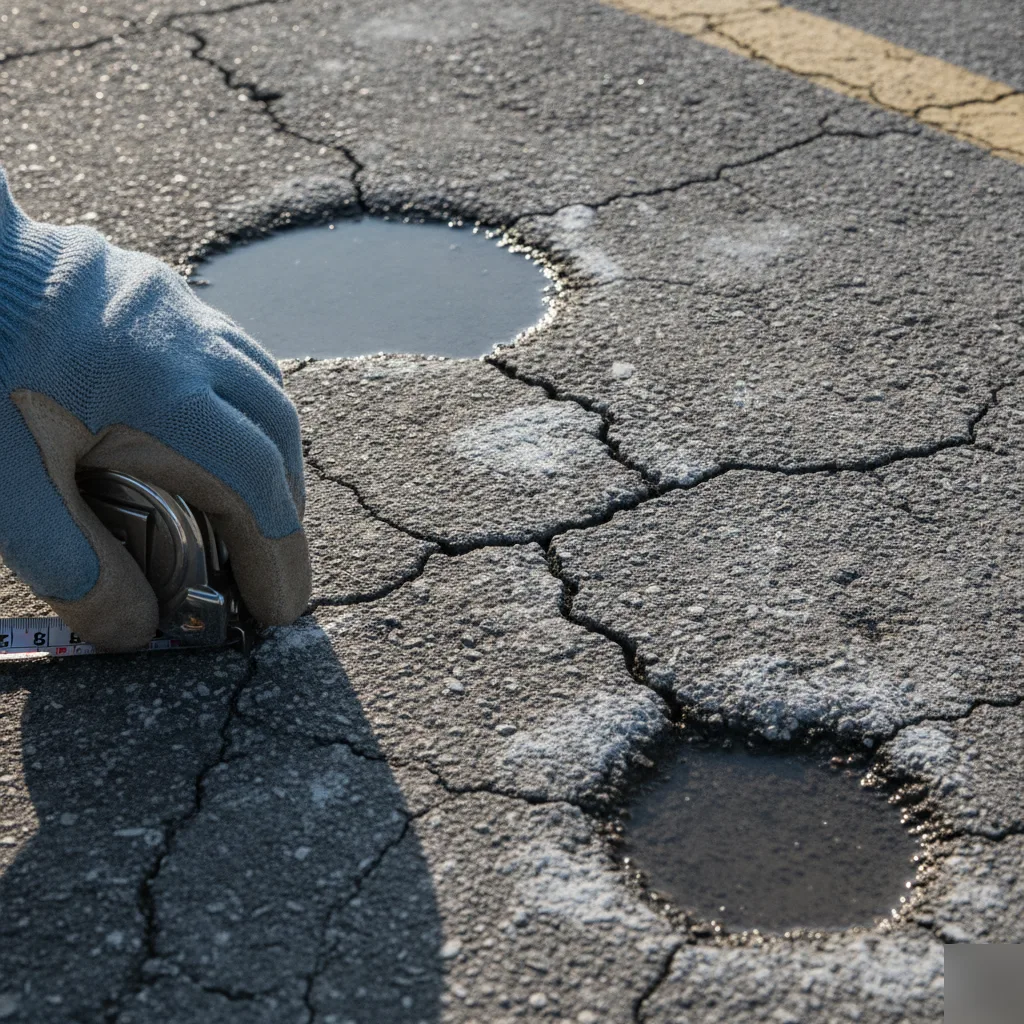
What should make you pick up the phone? Cracking is the big one. A single hairline crack isn't an emergency. A spiderweb pattern, what we call alligator cracking, means the base underneath has failed. That's not a surface problem anymore.
Standing water deserves its own mention. Volusia County gets heavy summer rain. If your lot or driveway holds water instead of shedding it, that's a drainage problem, not just a cosmetic one. Water sitting on asphalt for hours breaks down the binder holding everything together. We've walked properties where the owner thought they had a small crack problem. It turned out the whole section had lost its base.
Not sure if what you're looking at is serious? That's a common question, and it's a fair one. A property manager once called us about a driveway crack she'd been watching for months. Water had undermined about a third of the slab underneath.
Not every problem needs the same answer. That's the part people miss. Somebody calls us about a driveway with a few cracks, thinking they need the whole thing torn out. That's not true. Learn more about your new Asphalt Contractor in Volusia County.
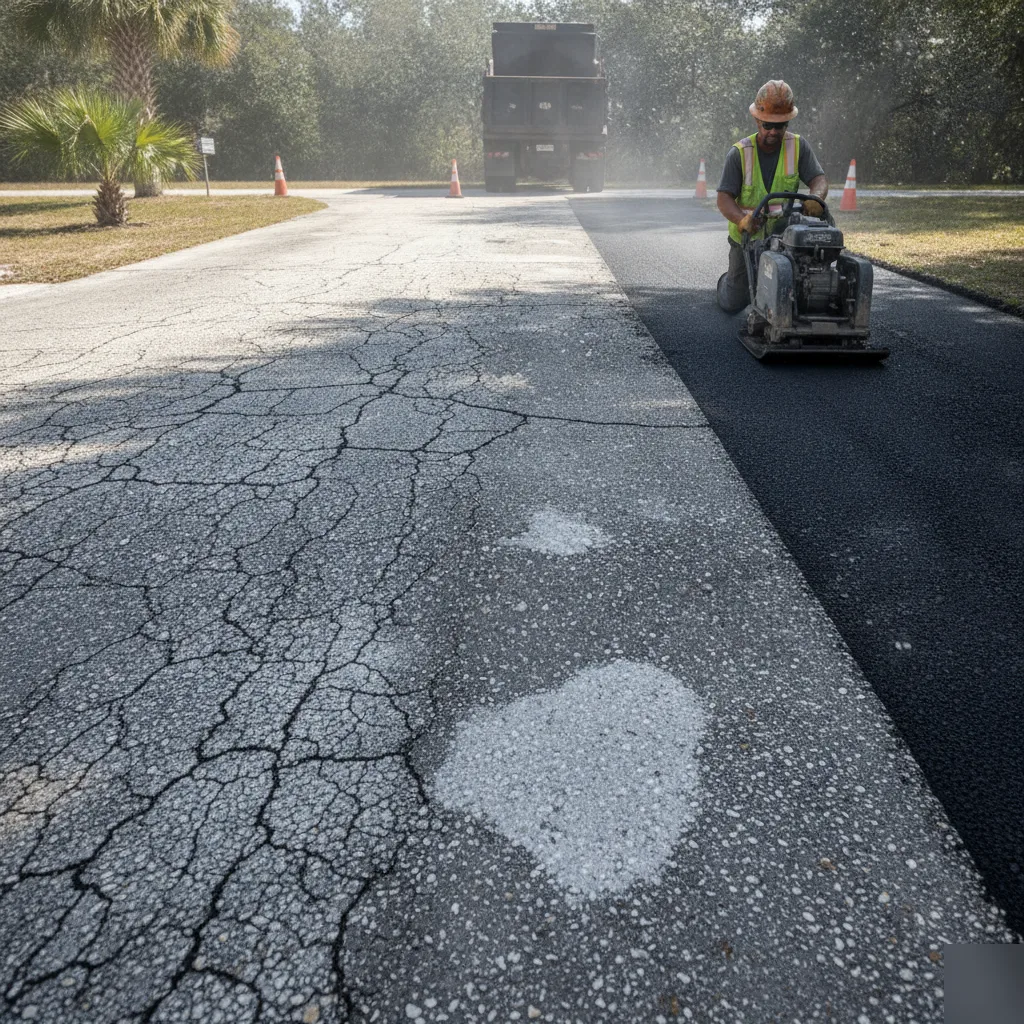
Here's how we sort it out. If the base is solid and the surface just looks tired, asphalt sealcoating and crack filling usually solve it. If the surface has real damage but the base underneath is sound, asphalt resurfacing and overlay can put a fresh layer down without a full rebuild. If the base itself has failed, that's a different conversation entirely. It usually means asphalt removal and starting over with proper grading and site preparation.
For property managers and business owners across Volusia County, this matters for budgeting as much as anything. A resurfacing job costs less than a full removal and repave. Knowing which one you need protects your budget for the next three to five years, not just this quarter.
If you're not sure which category your situation falls into, that's normal. It's exactly what a walk-through is for. You can get the full rundown of what we handle on our main service page, where every service we just mentioned is broken down in more detail.
Here's what nobody tells you about asphalt paving. The part you see, the black stuff getting laid down, isn't the part that matters most. It's everything underneath it.
Before we ever bring out a paver, we're grading and leveling the site. Volusia County has a mix of sandy soil and low spots that hold water, especially out toward the rural areas. If that ground isn't compacted right, your new asphalt will crack and sink within a couple years. We've seen it happen.
The process usually looks like this on a real job.
That subgrade prep step gets skipped more than you'd think. A low bid that looks great on paper sometimes just means somebody's cutting that step out. It's cheaper to skip it. It's also why some lots need repaving in five years instead of fifteen.
Not sure your site even needs that much prep work? That's a fair question, and it depends on what's there now and how it's held up.
If you're paving a driveway on solid ground with decent drainage already, prep is lighter. If you're dealing with a commercial lot that has flooded before, or old asphalt that's crumbling from underneath, the base work is where the real job happens. Ask any paving contractor bidding your job what they're doing below the surface. If they can't answer clearly, that tells you something.
Thinking about Asphalt Paving? Let's talk. Get Your Free Estimate Today.
Folks always ask the same thing first. How long is this going to take? Fair question. Most driveway jobs wrap up in a day or two. Commercial lots take longer depending on size and how many sections we're doing at once.
The timeline isn't just about laying asphalt. It's about what happens underneath it first. Skip a step and you're looking at cracks and soft spots way sooner than you should.
That last step trips people up every time. New asphalt looks finished way before it is. We've seen tenants roll a moving truck onto a lot two days after paving and leave a rut that's there for good. Give it the time it needs.
Rain is the other wildcard around here. Volusia County gets its share of summer downpours. A storm rolling through during compaction can push your schedule back a day. We watch the forecast closely before we commit to a start date. That's just part of doing this right.
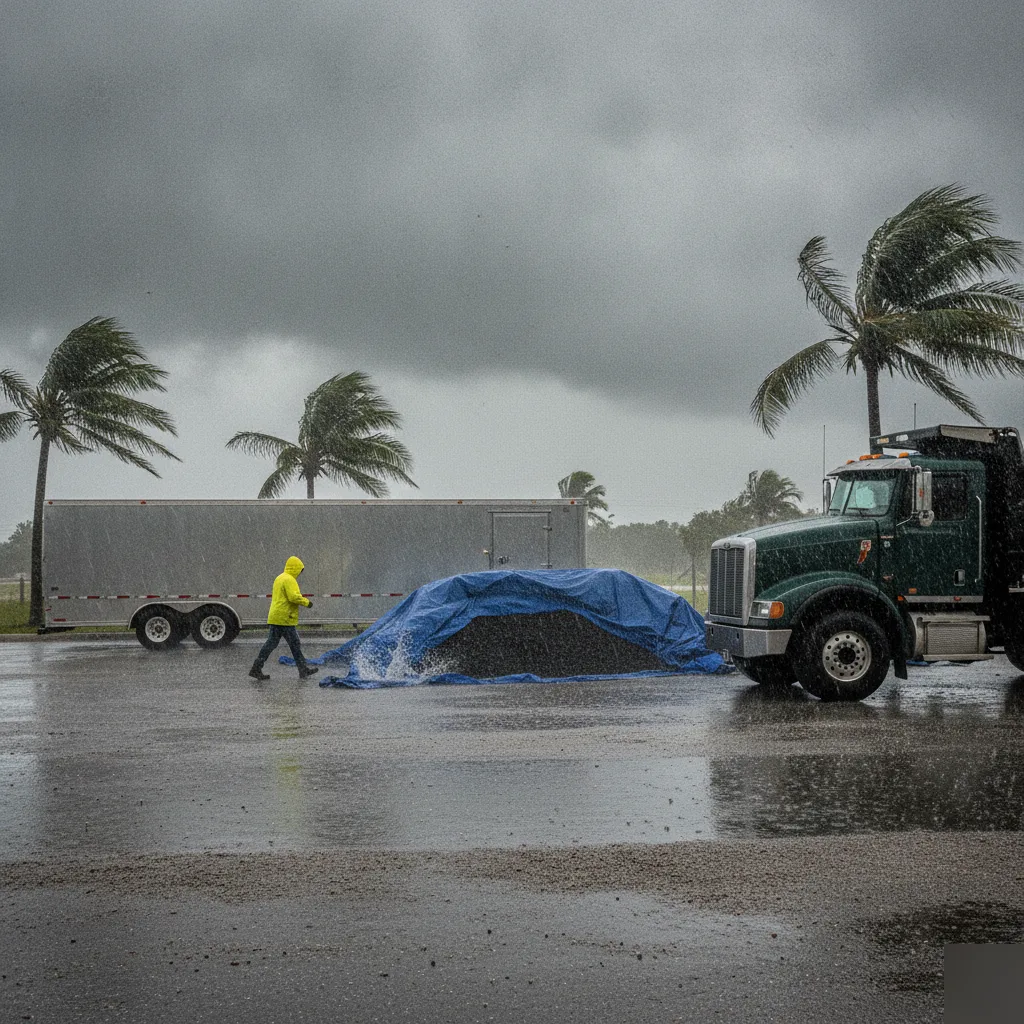
Volusia County gets hit hard from June through September. Afternoon storms roll in almost daily. Asphalt paving needs dry ground and dry air to go down right. Pour asphalt on a wet base and you're asking for trouble down the road, literally.
Here's what nobody tells you about scheduling a paving job in Florida. It's not just about avoiding rain on install day. The base underneath needs days of dry weather before we even show up, so it can compact properly and hold water the way it should.
We watch the forecast closely every summer. A job that looks fine on Monday can get pushed to next week if a tropical system parks itself over Central Florida. That's not us dragging our feet, that's us protecting your investment.
When's the best time to book? Late fall through early spring gives us the most predictable stretch of dry days. Winter in Volusia County rarely freezes, so cold isn't the obstacle here, water is.
If you're planning a commercial lot repaving or a new driveway, don't wait until May to call. Booking early means we can slot your job into a dry window instead of scrambling around a forecast.
It depends on whether the base underneath has failed. If you see a few surface cracks or fading but no potholes, sealcoating or crack filling usually fixes it.
If cracks connect into a web pattern, called alligator cracking, the base has likely broken down and needs full removal. A walk-through is the fastest way to tell which one you're dealing with, since guessing wrong can waste money on the wrong fix.
Standing water breaks down the binder holding your asphalt together, and it's a bigger deal in Volusia County because of heavy summer rain. If a lot or driveway holds water for more than a day after rain, that's a drainage problem, not just a puddle.
We've seen properties where a small crack turned out to be a third of the slab undermined by water sitting underneath it for months.
Most driveway jobs finish in a day or two, while commercial lots take longer based on size and how many sections need paving at once. The bulk of the time goes into what happens before paving starts, like grading and compacting the base.
Skipping that prep work to save time is exactly why some lots crack and sink within a couple years instead of lasting over a decade.
It depends on your site's current condition and drainage history. Volusia County has sandy soil and low spots that hold water, especially in rural areas, so proper grading and compaction matter more here than in areas with firmer ground.
A driveway on solid, well-drained ground needs lighter prep. A commercial lot that's flooded before, or has crumbling asphalt, needs real base work before anything gets paved.
Resurfacing adds a fresh asphalt layer over a base that's still solid, while full removal means tearing everything out and starting over with new grading. Resurfacing works when your surface looks worn but hasn't developed potholes or alligator cracking.
Removal becomes necessary once the base itself has failed and flexes underfoot. Knowing which one your property needs protects your budget for the next several years.
Ask them directly what they're doing below the surface before any asphalt goes down. A contractor who can't clearly explain grading, compaction, and drainage planning is likely skipping the subgrade prep step to offer a lower bid.
That step gets skipped more often than people realize, and it's the main reason some lots need repaving in five years instead of lasting fifteen.
Don't wait until small problems become expensive emergencies. Call now for your asphalt inspection.